
PRP, PDRN or exosomes? A plain guide to non-surgical hair regrowth
Three names you will meet the moment you search "hair loss treatment". How each works, what is realistic, and the limit none of them can cross.
Hair loss is one of the most emotionally loaded things we treat, and the marketing around it takes full advantage. Before any comparison, one sentence matters more than the rest of this article: these treatments support follicles that are still alive. Where a follicle has been gone for years, nothing in this guide will bring it back — that conversation is about transplantation, and we will tell you so at assessment.
With that said honestly, here is what each option actually is.
PRP: your own biology, concentrated
PRP starts with a small draw of your own blood. We spin it down to concentrate the platelets — the fraction that carries your growth factors — and return it to the scalp where the thinning is. Because it comes from you, nothing foreign is introduced. It has the longest track record of the three, and results build over a short course of sessions, not overnight.
PDRN: signalling repair
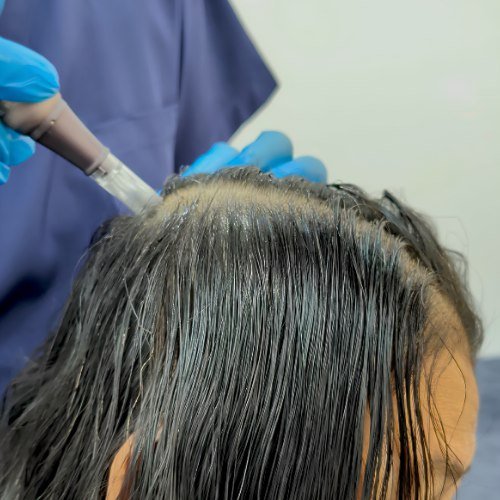
PDRN is a regenerative polynucleotide used to stimulate the tissue around the follicle — the environment the hair grows out of. Think of it less as fertiliser for the hair and more as repair work on the soil. It is delivered as a course over several months and pairs naturally with the other two.
Exosomes: the needle-free option
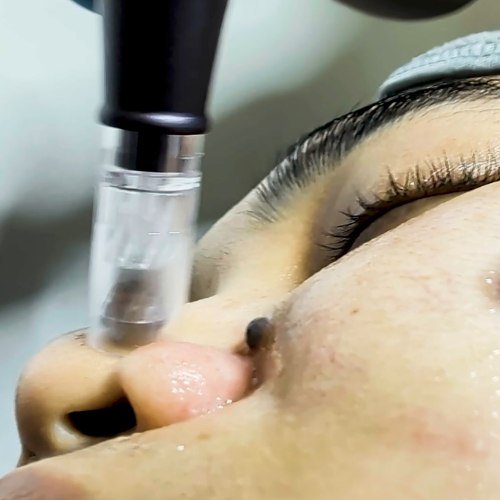
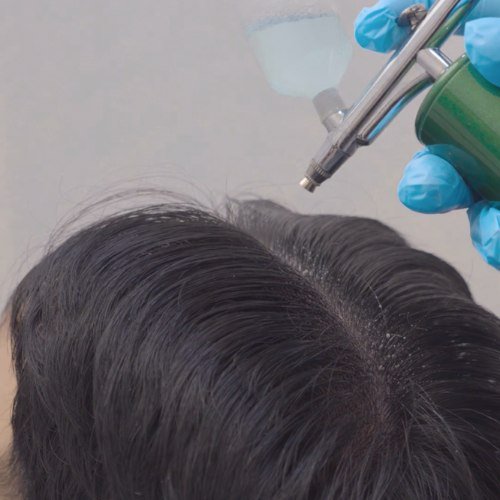
Exosomes are cell-derived signalling particles applied to the scalp. Ours is a strictly needle-free, topical protocol — never injected, never microneedled — which makes it the most comfortable entry point, and the one we suggest for people who cannot face needles at all.
So which one?
The honest answer is that they are not really rivals. PRP brings growth factors, PDRN repairs the environment, exosomes add signalling — clinics that get results usually sequence or combine them rather than crowning a winner. What decides the plan is your scalp: the pattern of thinning, how long it has been happening, and what the follicles look like on examination.
Why the scalp itself comes first
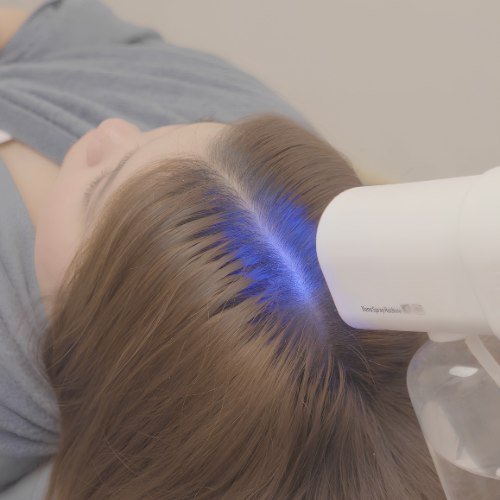
A regrowth plan applied to an inflamed, congested scalp is money poured onto a blocked drain. If there is buildup, flaking or irritation, we settle it first with a deep-cleansing scalp treatment — unglamorous, inexpensive, and the reason the expensive part works.
What a real plan looks like
An assessment with photographs, a defined course, a review point at three to four months against the baseline pictures, and a clinician willing to say "this is not working, let us change course." Anyone promising guaranteed regrowth, in any timeframe, is promising something biology does not.