

Melasma Treatment: Why Your Dark Patches Keep Coming Back
Melasma can be frustrating—especially when dark patches seem to return even after you've treated them. From sun exposure and hormonal changes to everyday skincare habits, several factors can influence pigmentation and recurrence. In this guide, we explore why melasma happens, why it can be difficult to manage, and how a personalized professional treatment approach can help improve and maintain more even-looking skin.
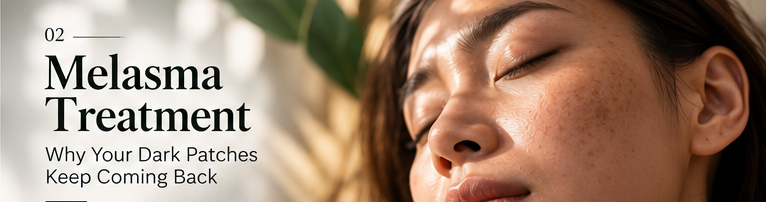
Melasma is one of the most frustrating pigmentation concerns because it can improve with treatment and still return later. The brown or grayish patches commonly appear on areas such as the cheeks, forehead, upper lip, and nose, and their appearance can be influenced by factors including sun exposure, hormones, heat, genetics, and individual skin characteristics.
Managing melasma isn't simply about finding a product that makes pigmentation lighter. Long-term improvement often requires understanding what may be triggering or worsening the condition and developing a consistent approach to treatment and prevention. In this guide, we explore why melasma develops, why it can be persistent, the role of UV and visible-light exposure, and why aggressive or unsuitable treatments may sometimes make pigmentation more difficult to manage. We'll also discuss professional treatment approaches, aftercare, sun protection, and why personalized evaluation is important when creating a plan for melasma-prone skin.