
How to choose between laser treatments
Most people are told a laser will fix their skin — without being told which laser, or why. The short, honest version of a confusing category.
Most people arrive having been told a laser will fix their skin, without ever being told which laser, or why. The category is genuinely confusing, so here is the short version.
They are not interchangeable
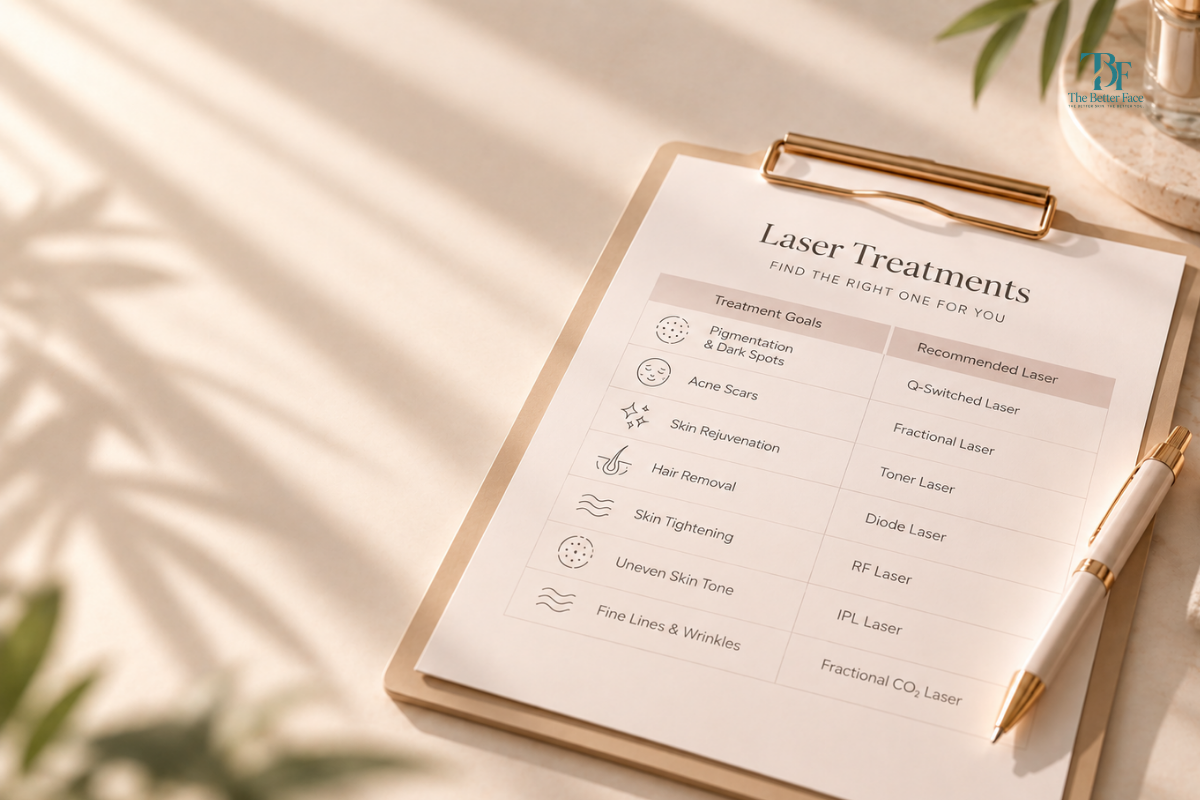
Lasers are chosen by what they target. Pigment, blood vessels, hair and water all absorb light differently, and a device tuned for one is close to useless for another. A clinic offering "laser" as a single service is a clinic to ask harder questions of.
The three you will most often be offered
Pico targets pigment. Ultra-short pulses shatter it mechanically rather than burning it, which puts less heat into the skin — the reason it is usually the safer choice on deeper skin tones.
Diode targets the hair follicle. It is a hair-reduction device. It will not do anything meaningful for pigmentation.
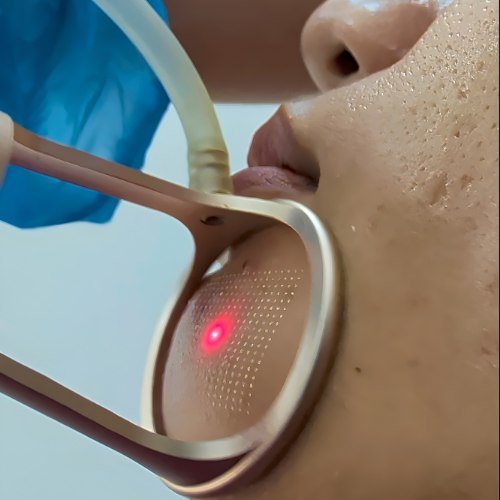
Fractional resurfacing targets water in the tissue to drive collagen remodelling. It is the heaviest of the three, with the most downtime, and the right answer for texture and scarring rather than tone. Ours is a CO₂ fractional laser.
Four questions worth asking any clinic
- Which device, by name, and who operates it?
- What is the patch-test protocol for my skin tone?
- How many sessions, and what happens if I see no change after two?
- What does the price cover — the session, or the course?
A clinic that answers all four without hesitating is a clinic that has thought about it. If the answer to the fourth is vague, ask again before you pay.
The honest part
No laser will fix skin that is being undermined by sun exposure. SPF is not an upsell attached to the end of a treatment plan — it is the part of the plan that determines whether the rest of it holds.