

Chemical Peel vs Facial: What’s the Difference and Which One Do You Need?
A facial and a chemical peel may both leave your skin looking refreshed, but they work in very different ways. If you're dealing with dullness, acne, pigmentation, uneven texture, or congestion, understanding the difference can help you choose the right treatment. We break down how each treatment works, what concerns they address, what recovery may involve, and when one option may be more appropriate than the other.
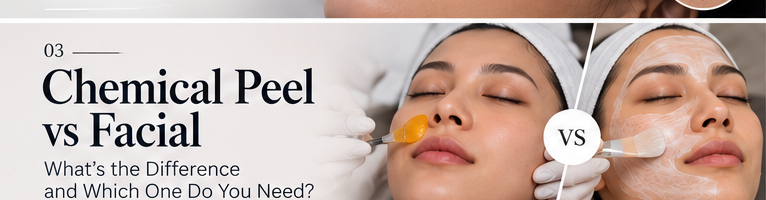
Facials and chemical peels are both popular professional skin treatments, but they aren't interchangeable. A facial may focus on cleansing, exfoliation, hydration, and improving the overall appearance of the skin, while a chemical peel uses a carefully selected solution to exfoliate the skin at a controlled depth. The right option depends on your skin type, concerns, sensitivity, and desired outcome.
If you're dealing with dullness, congestion, acne, pigmentation, uneven texture, or simply want your skin to look refreshed, understanding the difference between these treatments can help you make a more informed decision. In this guide, we compare chemical peels and facials, explain how each treatment works, discuss which concerns they may be better suited for, and explore what you can expect before and after treatment. Most importantly, we'll explain why the "best" treatment isn't necessarily the strongest one—it is the one that is appropriate for your skin at that point in time.